
Into the Theater: Tech Week Begins
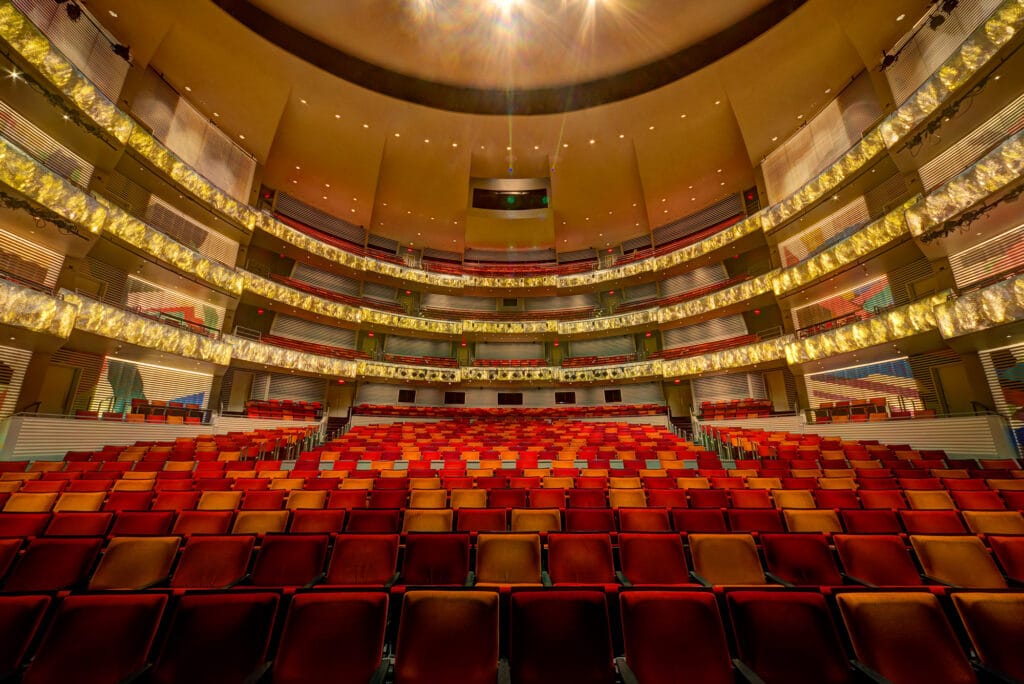
La Bohème’s tech week started today, which means the show has finally left the rehearsal room. We open a week from tomorrow.
There’s always something a little strange about that last day in the studio. You spend weeks in a room with spike tape on the floor and everyone gets very good at imagining the walls. Then you walk into the theater and the walls are actually there, and everything you’ve been imagining has to be renegotiated in about a day.
We got our first look at the set on Wednesday, which was a very full day. This production’s scenery was designed by R. Keith Brumley, and the thing I find most satisfying about it is how it puzzles itself together act by act. The back of the artists’ garret in Act One turns around and becomes part of the streets of Paris in Act Two. Another wall conceals the row of doors that opens into the Café Momus. A third hides the door to the tavern in Act Three. Nothing is wasted. Every surface is doing two jobs, which is what lets the whole thing shift over an intermission instead of over an afternoon.
I love seeing that kind of design up close. It’s the sort of thing an audience should never have to think about, and that’s rather the point. You want them to believe that the garret and the Latin Quarter and the tollgate at the Barrière d’Enfer are three different places in the world, not three arrangements of the same scenic pieces. But standing in the theater on Wednesday, watching the crew turn a wall and reveal a café, was one of those moments where the craft of the thing is genuinely thrilling on its own terms.
Tonight was our first piano tech. The cast is onstage for the first time, we have piano rather than orchestra, and we move through the piece slowly. Very slowly. Piano tech is the rehearsal where many of the visual elements arrive at once and have to start agreeing with each other.
The lighting designer, James Sale, is beginning to set cues and levels, which means stopping, looking, adjusting, and looking again. And our director, Garnett Bruce, is looking at spacing and blocking, because staging that worked perfectly in the studio doesn’t always survive contact with a real set. A cross that took eight seconds in the room might now take twelve, or six, now that you suddenly have to move up a staircase, and not across the spike tape. A sightline that was fine when we were all sitting at tables is suddenly not fine at all when you’re actually seeing it from the house. Stage management is learning their tracks, figuring out where each cue gets called from and what has to happen in the dark between one thing and the next.
Everybody is doing a different job in the same room at the same time, and all of those jobs require stopping. So sometimes you stop a lot.
The other thing that happens tonight, and that I always find worth watching, is the singers meeting the set. In the room, a door is a piece of tape. Onstage, it’s a door with weight and a handle and a specific sound when it closes. Stairs are actually stairs. You can see people recalibrate in real time, and often the staging gets better for it, because now they’re responding to something real instead of something agreed upon.
There’s still a lot ahead. More tech, orchestra, the dress rehearsals. But tonight was the first time the whole thing existed in the same space, and even moving at piano tech’s careful crawl, you could feel the shape of the show in the room.
We open next Saturday.
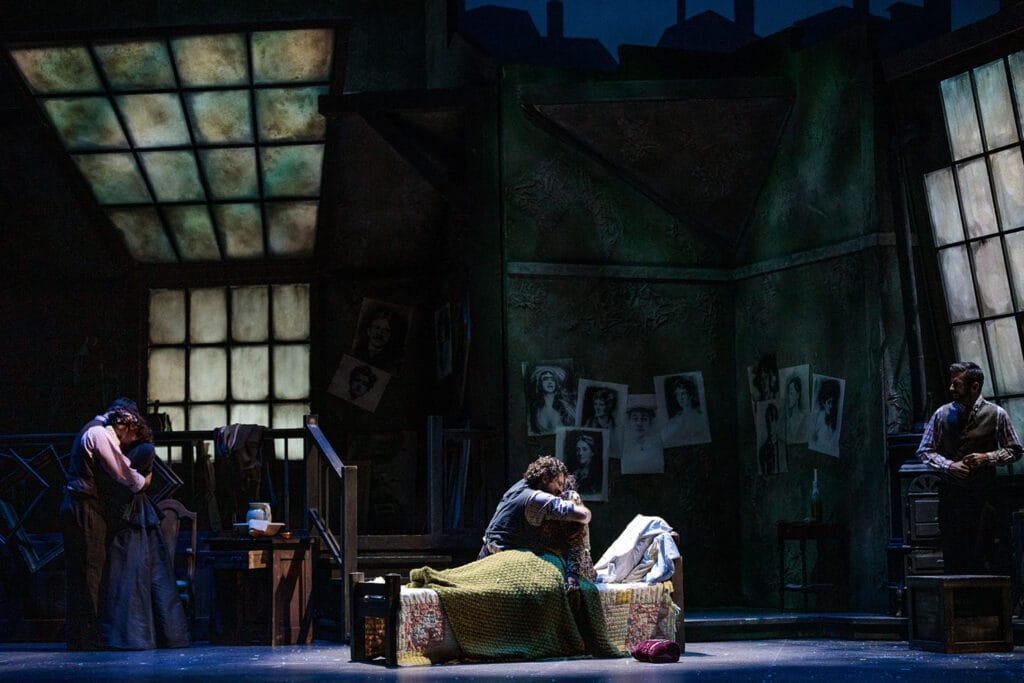
Photo of act IV from the Lyric Opera of Kansas City's production of "La Boheme," in 2019. Photo by Karli Cadel.